A clean car can still be a damaged car. That is the part many owners learn the hard way after seeing spiderweb marks glowing under gas station lights. Proper Car Wash Techniques are not about making foam look impressive or rushing through a weekend rinse. They are about controlling dirt before it turns into sandpaper against your paint.
American drivers deal with a rough mix of road salt, brake dust, pollen, freeway grime, tree sap, hard water, and blazing sun. A vehicle in Arizona does not collect the same mess as one in Michigan, and a truck in Texas does not need the same wash rhythm as a sedan parked under New Jersey trees. Smart cleaning starts by respecting those differences.
Good paint care also protects resale value. A glossy finish makes an older vehicle look cared for, while scratched clear coat makes even a newer model feel neglected. For drivers who follow trusted automotive care advice and broader vehicle ownership guidance from resources like professional auto maintenance insights, the goal is not perfection. The goal is a repeatable wash routine that keeps the finish honest, bright, and safe.
Car Wash Techniques That Start Before Water Touches Paint
The safest wash begins before the hose turns on. Most scratches happen because people treat all dirt the same, but loose dust, baked-on mud, bug residue, and oily road film behave differently. A rushed wash pushes these particles across the clear coat before they loosen. That is where damage starts.
Why Pre-Rinsing Matters More Than Extra Soap
A strong pre-rinse removes the dirt that would otherwise drag under your mitt. This step sounds simple, yet it separates careful owners from weekend swirl-makers. Water pressure should move from top to bottom because the lower panels carry the heaviest grime from tires and road spray.
A roof usually holds dust and pollen. Rocker panels hold grit, salt, and tiny road particles. Treating both areas with the same pressure and timing makes no sense. Give the lower third of the vehicle more attention before any contact wash begins.
A foam pre-wash can help when the car carries sticky film from highway driving. Foam is not magic, though. It works because it holds cleaners against the surface long enough to soften grime. Let it dwell for a few minutes, then rinse it away before touching the paint.
How to Read the Dirt Before You Wash
A car tells you what kind of cleaning it needs if you slow down for a moment. Light garage dust may need only a gentle rinse and contact wash. A winter vehicle covered in salt needs a longer rinse, wheel cleaning, and extra focus under the fenders.
Bug splatter on the front bumper needs targeted softening before washing. Scrubbing bugs with force is one of the quickest ways to haze modern clear coat. Use a bug-safe cleaner, let it sit briefly, and rinse before using a mitt.
Tree sap and bird droppings deserve even more care. Both can stain paint if left too long, especially during hot U.S. summers. Remove them early with a dedicated product and gentle pressure. The paint will thank you later.
Choosing Tools That Protect the Clear Coat
A good wash does not require a wall full of expensive products. It requires clean tools, soft materials, and the discipline to separate dirty areas from cleaner ones. The wrong towel can undo every careful step before it.
Why Microfiber Quality Changes the Result
Quality microfiber lifts dirt away from the surface instead of grinding it flat against the paint. Cheap towels often feel soft in the package but turn grabby after a few washes. That roughness shows up later as faint scratches under sunlight.
Use different towels for paint, wheels, door jambs, and interior work. Never let a wheel towel touch the hood. Brake dust contains sharp metallic particles, and those particles do not belong anywhere near clear coat.
Wash microfiber separately from cotton towels and household laundry. Fabric softener ruins absorbency and leaves residue behind. Dry them on low heat, then store them in a clean bin where dust and grit cannot settle into the fibers.
The Two-Bucket Method Still Earns Its Place
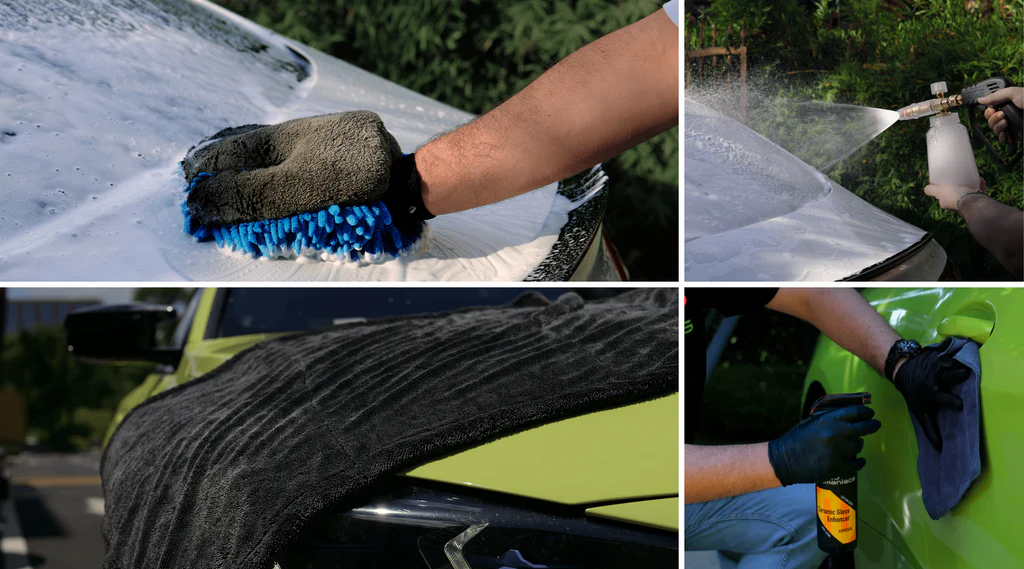
The two-bucket method works because it gives dirt somewhere to go. One bucket holds soapy water. The second bucket holds rinse water. After each pass, rinse the mitt before reloading it with fresh soap.
A grit guard at the bottom adds another layer of safety. It helps keep heavy particles below the wash mitt instead of floating back into contact with the paint. This matters most when cleaning vehicles that see gravel roads, snow, or construction zones.
Work in straight lines instead of circles. Circular washing makes swirls easier to see when scratches do happen. Straight-line movement does not prevent every mark, but it makes paint defects less obvious and easier to polish later.
Scratch Free Vehicle Cleaning Requires Better Washing Order
Paint damage often comes from bad sequence, not bad products. Many drivers wash wheels last, then splash dirty brake dust back onto clean panels. Others start low on the doors and carry grit up to the hood. Order matters because dirt moves.
Why Wheels Should Be Cleaned First
Wheels are usually the dirtiest part of the vehicle. They collect brake dust, tar, road salt, and oily residue from the pavement. Cleaning them first keeps that mess away from freshly washed paint.
Use a dedicated wheel bucket, wheel brushes, and wheel towels. This is not overkill. It is common sense. A brush that scrubs inside a wheel barrel has no business touching a painted fender.
Rinse wheel wells while you are there. In snowy states, salt collects behind liners and along lower edges. In warmer states, sand and dust build up in the same places. Keeping these areas clean slows corrosion and keeps the whole vehicle looking better.
Top-Down Washing Keeps Grit Moving Away
Start with the roof, glass, hood, and upper panels. These areas usually carry the lightest dirt. Move to the doors, rear hatch, bumpers, and lower panels after the cleaner sections are done.
Rinse the mitt often. More often than feels necessary. The moment the mitt touches a dirty lower panel, it needs a rinse before it goes back into soap. That small habit prevents most avoidable wash scratches.
Save the dirtiest paint areas for last. Lower doors, rocker panels, rear bumpers, and tailgates collect the worst road film. Treating them as a separate stage keeps grit from migrating across the whole vehicle.
Drying Without Leaving Water Spots or Swirl Marks
Drying can be more dangerous than washing. Wet paint feels clean, so people get careless. Then one dusty towel, one dragging motion, or one missed grit particle leaves marks across a freshly washed surface.
Why Air and Blotting Beat Dragging
A clean drying towel should absorb water, not scrape it around. Lay the towel on the surface, pat or pull gently in one direction, then lift it. Avoid grinding pressure. You are drying paint, not sanding wood.
A car blower or leaf blower can help around mirrors, grilles, badges, and trim. Water trapped in these areas drips later and leaves streaks down clean panels. Blowing it out before towel drying saves time and reduces contact.
Use a drying aid if the paint is already clean. A light spray can add slickness between the towel and paint. That slick layer helps reduce friction, especially on darker vehicles where small marks show fast.
How Hard Water Changes the Wash Routine
Hard water leaves mineral spots when it dries on hot paint. Many U.S. cities deal with mineral-heavy water, and summer heat makes the problem worse. Washing in direct sun turns a safe routine into a race you rarely win.
Wash early in the morning or late in the afternoon. Keep panels wet until you are ready to dry them. If water starts drying during the wash, rinse that section again before minerals bond to the surface.
A filtered rinse system helps serious owners, but timing matters more for most drivers. Shade, cooler paint, and quick drying prevent more spots than fancy products used at the wrong hour.
Protecting Paint After the Wash
A safe wash cleans the vehicle. Protection keeps the next wash easier. Wax, sealant, or ceramic spray gives dirt less grip and gives towels more glide. That means fewer chances for scratches during future cleaning.
Why Protection Makes Future Washes Safer
Unprotected paint grabs grime faster. Road film clings harder, water dries flatter, and towels drag more during drying. Protected paint releases dirt with less effort, which lowers the amount of contact needed.
Traditional wax gives warmth and gloss, but it usually fades faster. Paint sealants tend to last longer. Ceramic sprays offer slickness and water behavior that many daily drivers appreciate. The best choice is the one you will actually maintain.
Do not apply protection over dirty paint. That traps contamination under the product and weakens the result. Wash properly first, dry fully, and apply in thin layers. Thick product wastes time and can streak badly.
How Often American Drivers Should Wash
There is no perfect wash schedule for every driver. A garaged car in Southern California may stay clean longer than a daily commuter in Ohio winter slush. The environment decides the rhythm.
Weekly washing works well for vehicles exposed to salt, bugs, bird droppings, coastal air, or heavy pollen. Every two weeks may be enough for a lightly driven car parked indoors. Waiting months between washes lets contamination bond harder to the paint.
The real rule is simple: wash before dirt becomes stubborn. Fresh grime rinses away. Old grime fights back. That fight is where scratches happen.
Common Mistakes That Create Scratches During Washing
Most paint damage comes from habits that feel harmless. A kitchen sponge, a beach towel, a dirty wash mitt, or a quick wipe at a gas station can leave marks that take hours to correct. Convenience often costs more than care.
Why Automatic Brush Washes Can Be Risky
Automatic brush washes are fast, but their brushes touch many vehicles before yours. If the truck ahead carried mud, grit may remain in the equipment. That grit can slap against your paint at speed.
Touchless washes reduce contact, but they often use stronger chemicals to compensate. That can strip wax faster and may not remove bonded grime fully. They are useful in winter when salt needs to come off, but they should not replace careful hand washing forever.
A well-run professional detail shop can be worth the cost when the vehicle needs deeper cleaning. Still, ask about their process. Clean towels, separate wheel tools, and safe drying methods matter more than shiny marketing signs.
Why Quick Wipes Cause Long-Term Damage
Dusty paint should not be wiped dry. Even light dust can scratch when dragged across the surface. This is why parking lot wipe-downs often create more harm than the dirt they remove.
Use a rinseless wash only when the vehicle is lightly dirty and you have enough clean towels. Fold towels into sections and use each side once. When a towel face gets dirty, switch to a clean one instead of rubbing harder.
Interior discipline helps exterior paint too. Keep emergency towels sealed in a bag, not loose in the trunk. A towel that has collected sand, crumbs, and cargo dust is no longer safe for paint.
Conclusion
A better wash routine is not about turning your driveway into a detailing studio. It is about respecting the surface you paid for and refusing to let careless habits age your vehicle before its time. Paint does not need aggressive scrubbing. It needs patience, clean tools, good order, and enough protection to make the next wash easier.
The smartest Car Wash Techniques feel almost boring once you learn them. Rinse well. Separate dirty tools. Wash from the top down. Dry gently. Protect the finish. Repeat before grime gets stubborn. That rhythm keeps a daily driver looking sharp through road trips, school runs, work commutes, and rough weather.
Start with one upgrade this week: replace the old towel, add a rinse bucket, or stop washing in direct sun. Small changes compound fast when they protect the clear coat every time you clean. Treat the finish like it matters, and the vehicle will keep looking like it belongs in your driveway.
Frequently Asked Questions
What is the safest way to wash a car without scratching it?
Use a strong pre-rinse, clean microfiber mitts, two buckets, and top-down washing. Keep wheel tools separate from paint tools. Dry with a soft towel using light pressure. Scratches usually come from trapped grit, not from washing itself.
How often should I wash my car in the United States?
Most daily drivers do well with weekly or biweekly washing, depending on weather and parking conditions. Wash sooner after road salt, bird droppings, bug splatter, coastal air, or heavy pollen. Fresh contamination is easier and safer to remove than baked-on grime.
Are automatic car washes bad for paint?
Brush-style automatic washes can scratch paint if their equipment holds grit from earlier vehicles. Touchless washes reduce contact but may use stronger cleaners. They are useful in a pinch, yet careful hand washing remains safer for long-term finish care.
What towels should I use for scratch free drying?
Use clean, high-quality microfiber drying towels made for automotive paint. Keep them away from wheels, tires, interiors, and household laundry. Wash them without fabric softener and store them in a clean container so grit cannot settle into the fibers.
Should I wash wheels before or after the paint?
Wash wheels first because they carry brake dust, road grime, and metallic particles. Use separate brushes, towels, and buckets for wheels. Cleaning them first prevents dirty splashback from landing on freshly washed paint.
Can I wash my car in direct sunlight?
Avoid direct sunlight whenever possible. Heat makes soap and water dry too fast, which can leave streaks and mineral spots. Wash early in the morning, late in the afternoon, or in shade so each panel stays cool during cleaning.
Is dish soap safe for washing a car?
Dish soap is not ideal for regular vehicle washing because it can strip wax and dry out trim over time. Use a pH-balanced car shampoo instead. Automotive soap gives better lubrication, which helps the mitt glide safely across the paint.
What is the best way to remove bugs without scratching paint?
Soften bug residue before touching it. Use a paint-safe bug remover, let it dwell briefly, then rinse well. Avoid aggressive scrubbing on bumpers, mirrors, and front edges. Gentle loosening works better than force and helps protect the clear coat.