A car rarely warns you politely when its brakes are slipping out of shape. It starts with a faint squeal, a longer stop at a red light, or a brake pedal that feels a little softer than it did last month. Good Brake Maintenance Advice matters because most drivers in the USA depend on their vehicles every day, yet many only think about the brake system after something feels wrong. That is a costly habit, and sometimes a dangerous one.
Safe stopping is not only about pads and rotors. It is about paying attention to small changes before they grow into repair bills, roadside stress, or a close call in traffic. Drivers who follow trusted vehicle safety guidance often understand one simple truth: your brakes do not need panic-based care; they need steady, practical attention.
A smart driver treats brake care like tire pressure or oil changes. Not dramatic. Not complicated. Just part of owning a vehicle with respect for the people inside and around it.
Brake Maintenance Advice That Starts With Everyday Driving Habits
Brake problems do not always begin in the repair shop. Many start on normal streets, during normal commutes, with normal driving habits that slowly wear the system down. The way you stop, coast, follow traffic, and handle hills can change how long your brake parts last.
Why Smooth Stops Protect Brake Pads and Rotors
Hard braking wears parts faster because it creates more heat and friction in a shorter burst. Every sudden stop asks the pads to clamp harder against the rotors, and that heat has to go somewhere. Over time, repeated heat stress can lead to warped rotors, uneven pad wear, and a steering wheel that shakes when you brake.
Smooth stopping gives the brake system room to work without punishment. Leaving more space from the vehicle ahead lets you slow down with control instead of reacting late. That one habit can stretch brake pad life and make every drive feel calmer.
City driving makes this even more important. Stop-and-go traffic in places like Los Angeles, Chicago, Houston, and New York can grind through pads faster than open highway driving. The driver who rushes to every red light usually pays for it later.
How Extra Vehicle Weight Changes Stopping Power
A loaded vehicle needs more effort to stop. That includes road-trip luggage, tools in the trunk, sports gear, roof cargo, or a trailer. The heavier the vehicle, the harder the brakes must work, especially at highway speeds or on steep roads.
Many drivers forget this during family trips or home improvement runs. A midsize SUV packed for vacation will not stop like it does during a light weekday commute. The brake pedal may feel the same at first, but the distance needed to stop safely can grow.
Weight also adds heat. Heat is the silent enemy in most brake systems. When the system gets too hot, stopping power can fade, especially during long downhill drives. That is why drivers in mountain states or hilly areas need to use lower gears when possible instead of riding the brake pedal all the way down.
Warning Signs That Your Brake System Needs Attention
Most brake systems send signals before they fail. The problem is that drivers often explain those signals away. A squeak becomes “probably dust.” A vibration becomes “maybe the road.” A soft pedal becomes “it has always felt that way.” That kind of thinking turns a small repair into a serious safety risk.
What Brake Noise Usually Means
A high-pitched squeal often means the brake pad wear indicator is doing its job. That sound is designed to get your attention before the pad material gets too thin. Ignoring it can lead to metal-on-metal contact, which damages rotors and raises the repair cost fast.
Grinding is worse. A grinding sound can mean the pad material is gone or nearly gone. At that point, the brake system is no longer asking for service. It is demanding it.
Not every brake noise means disaster, though. Light squeaking after rain, car washes, or overnight moisture can happen. The difference is whether the sound disappears quickly or keeps coming back. Repeated noise deserves a real inspection, not guesswork from a parking lot.
Why Pedal Feel Should Never Be Ignored
A firm, predictable brake pedal gives a driver confidence. When the pedal feels soft, spongy, or sinks too far, the system may have air in the brake lines, low brake fluid, worn components, or a leak. None of those should wait.
A pulsing pedal can point to rotor issues. Pulling to one side while braking can suggest uneven brake force, stuck calipers, tire problems, or suspension issues. The brake system works with the whole vehicle, so one symptom can point to more than one cause.
This is where honest observation helps. You do not need to diagnose the vehicle yourself. You only need to notice what changed and tell the technician clearly. “It shakes when braking from highway speed” is far more useful than “the brakes feel weird.”
Building a Practical Brake Inspection Routine
Brake care works best when it becomes routine. Waiting for obvious trouble is the expensive path. A practical inspection schedule helps drivers catch worn pads, fluid issues, damaged rotors, and uneven wear before those problems affect real-world stopping.
When Should Drivers Check Brake Pads?
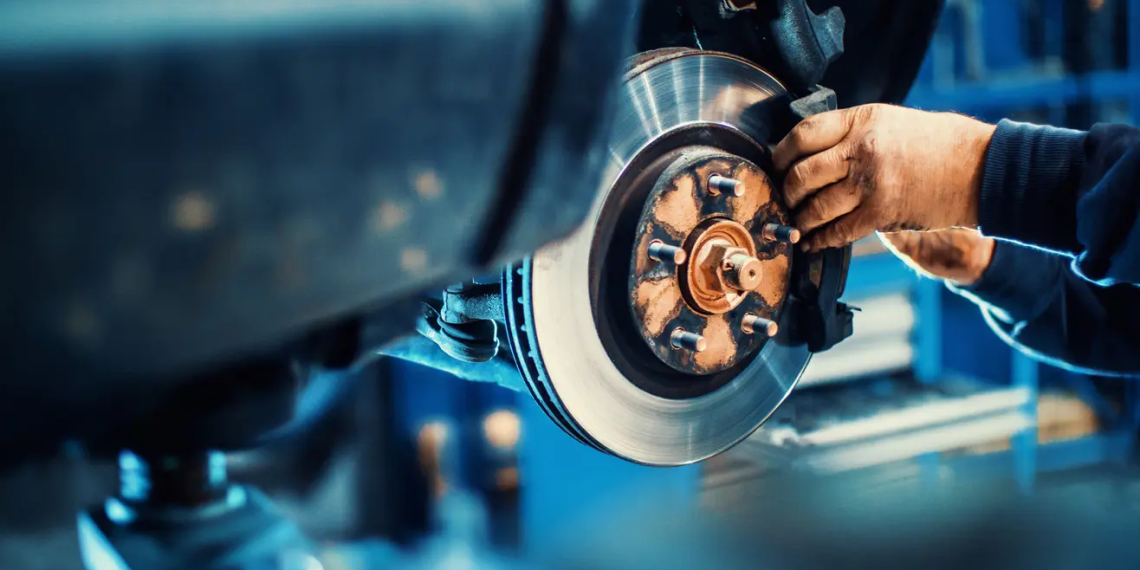
Most drivers should have brake pads checked during tire rotations, oil changes, or scheduled maintenance visits. That timing works because the wheels may already be inspected, and a technician can look for uneven pad thickness, rotor wear, leaking fluid, and hardware issues.
Mileage alone does not tell the whole story. One driver may need new pads at 25,000 miles because of city traffic and aggressive braking. Another may pass 60,000 miles because of light highway driving and smooth stops. Conditions matter more than guesses.
Visual checks help too, but they are limited. Some wheels allow you to see pad thickness through the spokes, while others hide the hardware. If you cannot see clearly, do not assume everything is fine. A proper inspection is cheaper than rotor replacement.
Why Brake Fluid Deserves More Respect
Brake fluid is easy to forget because it sits out of sight. That does not make it less important. It transfers force from your foot on the pedal to the brake components at each wheel, and it must handle heat without boiling.
Over time, brake fluid can absorb moisture. Moisture lowers performance and can contribute to corrosion inside the system. That is why many manufacturers recommend brake fluid service at set intervals, though the exact timing depends on the vehicle.
Drivers often spend money on cosmetic upgrades while ignoring brake fluid that has gone dark or weak. That is backwards. Clean wheels look nice, but clean, healthy brake fluid protects the system that keeps the vehicle under control.
Better Vehicle Safety Comes From Preventing Small Failures
Brake safety is not a single repair. It is a chain of small choices that keep the system ready when traffic changes fast. The safest drivers are not always the most technical. They are the ones who act early, ask clear questions, and refuse to gamble with stopping power.
How Tires, Suspension, and Brakes Work Together
Brakes can only do their job if the tires can grip the road. Worn tires, poor alignment, weak shocks, or low tire pressure can make stopping feel worse even when the brake parts are healthy. A vehicle does not stop through the brake pads alone. It stops through the contact patch where rubber meets pavement.
Wet roads make that connection even more important. A good brake system paired with bald tires is still unsafe. The brake parts may clamp perfectly, but the vehicle can slide if the tires cannot hold.
This is the overlooked part of vehicle safety. Drivers often separate systems in their minds, but the road does not. Brakes, tires, steering, and suspension all show up together when you need to stop hard.
Choosing the Right Repair Shop Without Getting Sold Extras
A good brake shop explains what is worn, what still has life, and what needs attention now. A weak shop scares you, rushes you, or gives vague answers. You should expect measurements, clear photos when possible, and a plain explanation of why a part needs replacement.
Ask about pad thickness, rotor condition, fluid condition, and whether both sides of the axle show even wear. Uneven wear may point to caliper or hardware issues, not only old pads. Replacing pads without fixing the cause can send you back to the shop sooner than expected.
Price matters, but cheap brake work can become expensive if it uses poor parts or skips needed steps. The best choice is not always the lowest quote. It is the repair that restores safe stopping without replacing parts that still have useful life.
Conclusion
Brake care rewards drivers who pay attention before trouble gets loud. A small squeal, a slight vibration, or a longer stop can be the first clue that your vehicle needs help. Acting early protects your wallet, but more than that, it protects your margin for error when a child runs across a street, traffic locks up ahead, or rain turns the road slick.
The best Brake Maintenance Advice is not complicated: drive smoothly, listen closely, check the system on schedule, respect brake fluid, and never treat stopping power as optional. Your vehicle can have a clean cabin, a strong engine, and fresh tires, but weak brakes change everything in one bad moment.
Make brake inspections part of your normal vehicle care routine, and choose a shop that explains the work clearly. Safe driving starts long before you press the pedal.
Frequently Asked Questions
How often should brake pads be replaced for safe driving?
Brake pads should be replaced when they reach the wear limit recommended for your vehicle, not by mileage alone. City driving, heavy loads, hills, and aggressive braking wear pads faster. Many drivers should have them inspected during routine service visits or tire rotations.
What are the first signs of bad brakes?
Common early signs include squealing, grinding, vibration, pulling to one side, longer stopping distance, or a soft brake pedal. Any repeated change in sound, feel, or stopping behavior deserves an inspection because small brake problems can grow fast.
Can I drive with squeaky brakes for a few days?
Light squeaking after moisture may disappear, but repeated squeaking should not be ignored. It can mean the wear indicator is warning you that pads are getting thin. Driving too long can damage rotors and raise the repair cost.
Why does my steering wheel shake when braking?
A shaking steering wheel during braking often points to uneven rotor surface, warped rotors, worn suspension parts, or tire issues. The exact cause needs inspection, especially if the shake happens at highway speed or gets stronger over time.
Is brake fluid replacement necessary?
Brake fluid replacement matters because old fluid can absorb moisture and lose performance under heat. It can also contribute to internal corrosion. Follow your vehicle manufacturer’s schedule, and ask your technician to test the fluid condition during brake service.
Do front brakes wear faster than rear brakes?
Front brakes often wear faster because vehicle weight shifts forward during braking. That puts more work on the front pads and rotors. Some vehicles wear rear brakes faster due to design, driving conditions, or electronic brake systems, so inspections still matter.
How can I make my brakes last longer?
Leave more space in traffic, avoid hard stops when possible, reduce unnecessary vehicle weight, downshift on long hills, and keep tires properly inflated. Smooth driving lowers heat and friction, which helps pads, rotors, and related parts last longer.
Should rotors always be replaced with brake pads?
Rotors do not always need replacement with pads. A technician should measure thickness, inspect the surface, and check for warping or scoring. If rotors remain within safe limits and have a healthy surface, replacement may not be needed.