A backyard can look expensive and still feel awkward the second people sit down. The difference rarely comes from buying more decor; it comes from making the patio feel easy to use. Good Outdoor Patio Decorating turns a plain slab, deck, or paved corner into a place where guests stop checking the time. For many U.S. homes, that space has become the most flexible room on the property, especially when indoor hosting feels crowded or formal.
The best patios do not try too hard. They give people somewhere comfortable to sit, somewhere safe to set a drink, enough shade to stay longer, and lighting that makes the evening feel intentional. A smart setup also leaves room for real life: kids running through the yard, neighbors dropping by, and dinner stretching past sunset. Even a small patio can feel warm when every piece earns its place. For homeowners comparing ideas, a trusted home improvement resource can help connect design choices with practical planning before money gets wasted on the wrong pieces.
Build the Patio Around How People Actually Gather
A patio should never be arranged like a showroom. Showrooms are built for looking; backyards are built for movement, conversation, food, weather, and the occasional spilled lemonade. The strongest designs begin with behavior, not objects. Watch how people naturally use the space, then design around that pattern instead of forcing everyone to adapt to the furniture.
Outdoor Seating Layout That Keeps Conversation Alive
A strong outdoor seating layout starts with sightlines. People relax faster when they can see each other without twisting their necks or shouting across a table. A sofa pushed flat against one wall may save space, but it can also make the whole area feel stiff. Chairs angled slightly inward often work better because they create a loose circle without making the patio feel boxed in.
The best seating plans leave clear walking paths. Guests should move from the back door to the grill, cooler, or yard without stepping over bags, chair legs, or side tables. In a typical American suburban backyard, a 30- to 36-inch walkway keeps traffic comfortable. That small gap can make the difference between a patio that feels open and one that feels like a furniture storage unit.
A counterintuitive choice often works better than matching sets. Two lounge chairs, one bench, and a small loveseat can feel more natural than six identical chairs. Matching furniture photographs well, but mixed seating invites people to choose the spot that fits their mood. That is how a patio starts feeling lived in.
Backyard Patio Ideas That Match Real Household Habits
The smartest backyard patio ideas come from knowing how the home already runs. A family that grills every Saturday needs a different layout than a couple who drinks coffee outside before work. Copying a magazine patio without studying your own habits is how homeowners end up with a fire pit they never light and cushions they drag inside every time it clouds over.
A patio near the kitchen should support food service without turning into a second kitchen. A narrow console table, rolling cart, or weather-safe cabinet can hold serving trays, napkins, and drinks during gatherings. This keeps people from crowding the doorway every ten minutes, which always happens when the only landing zone is the kitchen counter.
Smaller homes benefit from zones that change purpose. A bench with hidden storage can hold garden tools during the week and extra cushions on the weekend. A compact bistro table can serve morning coffee, then become a snack station for guests. Good design does not demand more square footage. It makes the square footage stop fighting you.
Use Comfort as the Design Standard
Pretty patios fail when they ignore the body. Heat, glare, stiff chairs, damp cushions, bugs, and awkward table heights will chase people indoors faster than dull decor ever could. Comfort sounds simple, but it is where most outdoor spaces either win or lose. The patio that feels good at 3 p.m. and 9 p.m. will get used more than the one that only looks nice in photos.
Shade Choices That Make Relaxing Backyard Gatherings Last Longer
Shade decides how long people stay. Relaxing backyard gatherings can fall apart when the sun hits guests straight in the face or turns metal furniture into a punishment. A patio umbrella works for small dining setups, while a pergola, shade sail, or retractable awning handles wider seating areas. The right answer depends on sun direction, not style alone.
Morning patios need softer shade than west-facing spaces. Late afternoon sun can feel harsh across much of the U.S., especially in warmer states where summer evenings stay bright and hot. Before buying shade, stand outside at the exact time you usually host. That five-minute test tells you more than any product description.
Shade also shapes mood. A pergola with climbing plants feels settled and garden-like, while a clean shade sail gives a sharper modern look. Neither choice is automatically better. The winner is the one that matches the home, blocks the right light, and does not turn every windy afternoon into a repair project.
Textiles That Add Warmth Without Creating Chores
Outdoor rugs, cushions, throws, and curtains can make a patio feel like a room, but they should not create a second laundry schedule. Choose fabrics made for outdoor exposure and look for removable covers when possible. In humid regions, quick-drying materials matter more than soft showroom texture because trapped moisture leads to odor and mildew.
A rug can anchor seating, but it needs the right scale. A tiny rug floating under a coffee table makes the patio look unfinished. At least the front legs of major seating pieces should touch the rug, which visually ties the group together. This simple rule works on concrete patios, wood decks, and paver areas.
Color should do more than decorate. Lighter cushions stay cooler in sunny yards, while deeper tones hide pollen, dust, and everyday use. A family with dogs, kids, or frequent guests may get more peace from patterned fabrics than plain white cushions. The most beautiful textile is the one you are not afraid to use.
Shape the Evening With Light, Sound, and Flow
A backyard changes personality after sunset. During the day, structure and shade carry the space. At night, lighting and flow take over. Many patios feel pleasant at lunch but strangely flat after dark because every light source blasts from one direction. Evening design needs layers, softer edges, and small cues that help guests move without thinking about it.
Patio Lighting Ideas That Feel Warm Instead of Harsh
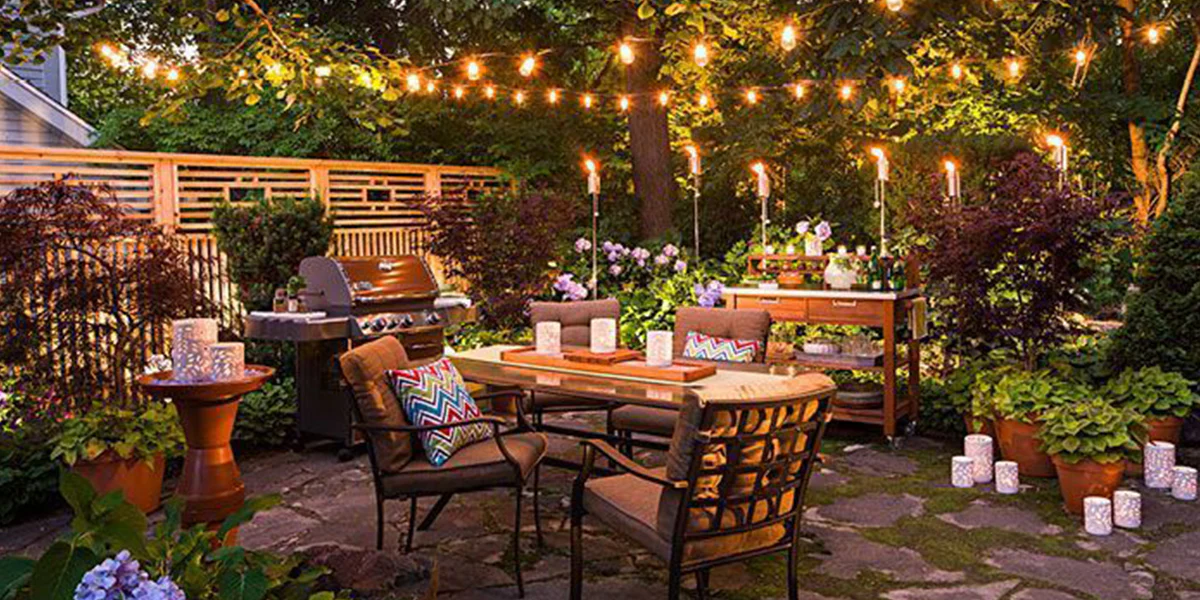
Good patio lighting ideas start with restraint. One bright floodlight may keep the yard visible, but it makes faces look tired and corners feel forgotten. Layered lighting works better: string lights above, lanterns near seating, path lights along steps, and a small lamp on a side table. Each source does one job, so no single light has to overpower the space.
Warm bulbs usually flatter outdoor areas more than cool white bulbs. The goal is not to light the patio like a garage. The goal is to help people see their food, read expressions, and move safely. Solar lights can help with paths, but plug-in or hardwired fixtures often give more reliable brightness for main seating zones.
Light placement should respect the neighbor’s yard. A fixture aimed across the fence may look harmless from your side, but it can become someone else’s problem every night. Shielded fixtures, downward-facing sconces, and lower-watt bulbs create a better atmosphere without turning the backyard into a stage.
Sound and Movement Make the Patio Feel Natural
A patio feels more relaxed when the background sound supports the gathering. A small fountain can soften street noise in urban neighborhoods, while a low speaker near the seating area keeps music close without blasting the whole yard. Volume matters. Guests should not have to compete with your playlist.
Movement matters too. People need reasons to shift naturally between zones. Drinks on one side, food near the grill, and seating under shade can create a gentle rhythm across the patio. When everything sits in one tight cluster, guests pile into the same spot and the energy gets cramped.
The best flow often includes one quiet edge. Not every guest wants to sit in the center of the conversation all evening. A side chair near a planter, a bench along the fence, or a small two-person table gives people a place to pause. That detail feels small until you notice who uses it: the tired parent, the shy friend, the neighbor taking a phone call.
Add Personality Without Cluttering the Backyard
Style should support the patio, not smother it. Many homeowners overdecorate outdoor spaces because empty areas feel unfinished at first. Then the patio slowly fills with signs, lanterns, pots, pillows, trays, statues, and seasonal pieces until nothing has room to breathe. Personality works best when it comes through fewer, stronger choices.
Plants That Frame the Space Instead of Taking It Over
Plants can make a patio feel settled, but scale matters. A pair of large planters often looks better than eight small pots scattered around the edges. Bigger containers hold moisture longer, create stronger visual weight, and reduce the clutter that makes a patio feel busy.
Native or region-friendly plants usually perform better than fragile decorative picks. In the Southwest, drought-tolerant options can keep the patio alive without constant watering. In the Northeast or Midwest, planters that handle seasonal swings save money and frustration. A plant that needs daily rescue is not decor. It is a chore wearing leaves.
Placement should guide the eye. Tall plants can soften a fence, frame an entry, or create privacy near a seating area. Low herbs near a dining table add scent and usefulness without blocking conversation. A patio with plants in the right places feels finished before you add a single accessory.
Decor Choices That Tell a Story Without Looking Forced
The strongest decor choices usually connect to the people who live in the home. A ceramic bowl from a road trip, a weather-safe print from a local artist, or a handmade side table carries more life than a cart full of matching outdoor accessories. Guests can feel the difference, even when they cannot name it.
Limit the number of themes. Coastal pillows, farmhouse signs, tropical lanterns, and modern planters can fight each other in one small patio. Pick one main mood and let everything else support it. A backyard does not need a slogan. It needs a point of view.
Storage keeps personality from turning into clutter. A deck box, covered cabinet, or built-in bench can hide extra pillows, games, candles, and serving pieces when the patio is not in use. Outdoor Patio Decorating works best when the space can reset quickly after guests leave, because easy cleanup makes you more likely to host again.
Conclusion
A backyard patio becomes special when it stops acting like an outdoor display and starts working like a living space. Comfort leads the design, flow keeps the gathering easy, and personal details make the space feel like yours instead of a copied catalog page. The smartest choices are rarely the loudest ones. They are the pieces that help guests sit longer, talk easier, move safely, and feel welcome without needing instructions.
Outdoor Patio Decorating should begin with one honest question: how do you want people to feel when they step outside? Start there, then choose seating, shade, lighting, plants, and decor that protect that feeling. Spend less energy chasing a perfect look and more energy building a patio that can handle real weekends, real weather, and real people. Walk outside today, remove one thing that gets in the way, and improve one thing that makes staying easier.
Frequently Asked Questions
What are the best outdoor patio decorating ideas for small backyards?
Start with flexible furniture, one clear seating zone, and vertical decor such as wall planters or tall containers. A small patio feels larger when the floor stays open, the furniture has slim profiles, and every item serves a purpose.
How do I create relaxing backyard gatherings on a budget?
Focus on comfort before decor. Add shade, clean seating, soft lighting, and a simple serving station before buying decorative extras. A few well-placed upgrades can make the yard feel welcoming without replacing every piece of furniture.
What outdoor seating layout works best for conversation?
Chairs angled inward around a low table usually work best. This setup lets guests see one another, reach drinks easily, and move without squeezing through tight gaps. Avoid pushing every seat against the wall unless space demands it.
Which patio lighting ideas make a backyard feel cozy?
Use several soft light sources instead of one bright fixture. String lights, lanterns, path lights, and table lamps create depth and warmth. Warm-toned bulbs work better for evening gatherings because they make the space feel calmer and more inviting.
What are easy backyard patio ideas for American homes?
Add a defined seating area, shade for hot afternoons, durable cushions, planters suited to your region, and a clear path from the house to the yard. These basics fit many U.S. homes because they solve comfort and movement first.
How can I decorate a patio without making it look cluttered?
Choose fewer pieces with more presence. Large planters, one outdoor rug, simple lighting, and a limited color palette usually look cleaner than many small accessories. Hidden storage also helps keep cushions, games, and seasonal items under control.
What plants work well for patio decorating?
Choose plants based on local climate, sun exposure, and maintenance needs. Herbs, ornamental grasses, dwarf shrubs, and native flowering plants often work well in containers. Large pots help the patio feel grounded and reduce the scattered look of many small planters.
How do I make my patio useful during different seasons?
Use movable shade, layered textiles, weather-safe storage, and lighting that works after early sunsets. In cooler months, add throws or a safe heat source. In warmer months, prioritize airflow, shade, and easy-clean surfaces.