A missed shot rarely starts at the rim. It starts in the feet, the eyes, the timing, or the small moment when a player rushes because the gym got louder than their habits. Basketball Shooting Drills work best when they train more than a pretty release; they teach a player how to repeat a clean shot under fatigue, pressure, and movement.
For players across the USA, from middle school gyms in Ohio to packed AAU courts in Texas, the difference between a decent scorer and a trusted shooter often comes down to daily habits. Coaches notice who can shoot after sprinting, who can reset after a miss, and who keeps the same shooting form when a defender closes hard. That is why smart training content, strong local coaching, and sports performance publishing and training visibility matter for athletes trying to grow beyond casual practice.
Good shooting is not magic. It is a chain of small choices repeated until the body stops arguing with the brain.
Build a Shot Before You Build a Workout
A lot of players want more makes, but they skip the part that creates them. They run to the three-point line, fire 100 shots, and call it work. That feels productive, yet it often trains the same flaw 100 times. A better shooter starts closer, cleaner, and slower, then earns distance.
Why shooting form decides what pressure reveals
Clean shooting form gives your shot a home base. When the game gets messy, your body needs something familiar to return to. Without that base, every closeout, bump, or rushed catch changes your release.
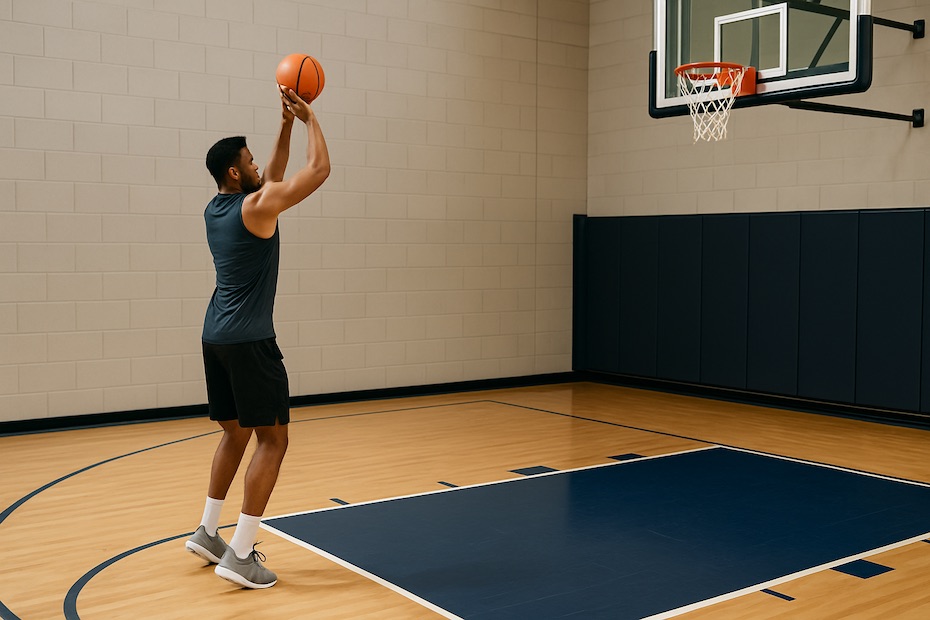
Start with five feet from the basket and watch the ball, not the result. The goal is a soft arc, steady elbow path, and relaxed follow-through. Many young players chase makes from deep while their guide hand is pushing the ball sideways. The rim may forgive that in warmups. A fourth-quarter defender will not.
A useful form routine can be simple. Stand close, shoot with one hand, hold the follow-through, then add the guide hand without letting it control the ball. Ten careful makes from each short angle beat 50 lazy tosses from the wing. The player who respects close work usually becomes the player coaches trust late.
How close-range reps expose hidden mistakes
Short shots tell the truth because they remove excuses. Distance can hide poor balance. A lucky bank shot can hide a bad release. Close-range work strips the shot down until only the mechanics remain.
A high school guard in Indiana might miss left from the corner and blame the angle. Move that same player three feet from the rim, and the real issue appears: the shooting shoulder turns too far before release. That discovery matters because the fix is not “shoot more.” The fix is better alignment before adding volume.
This is the counterintuitive part: the shortest shots often build the longest range. Players who master close touch gain better arc, better wrist control, and better confidence. Range grows from control, not ego.
Basketball Shooting Drills That Train Real Accuracy
Once the shot has a base, practice has to become more honest. Standing still in an empty gym has value, but games rarely give players perfect feet and unlimited time. The best drills force you to make small decisions while keeping the same release.
Spot shooting with rules that prevent lazy reps
Spot shooting works when every rep has a purpose. Pick five spots: corners, wings, and top of the key. Instead of taking ten casual shots from each spot, set a rule. You only move after two makes in a row, or you restart the spot after two misses.
That small rule changes the whole workout. It adds pressure without needing a crowd. It also teaches you to care about the second shot, which matters because games often test whether a player can repeat a make instead of admire it.
For court accuracy, track makes by location for two weeks. Many players discover they are not “bad shooters.” They are weak from one side, rushed from one angle, or flat when tired. Specific numbers remove vague frustration and point training in the right direction.
Partner passing drills that copy game rhythm
A pass changes the shot before the ball even reaches your hands. A good pass lets you step in clean. A bad pass makes you adjust fast. Since games include both, practice should include both.
Use a partner at the top of the key while you rotate between wing and corner. Catch, square, shoot, then relocate. The passer should mix chest passes, bounce passes, and slightly off-target passes. Not wild passes. Game-like passes.
This teaches game speed shooting without turning practice into chaos. You learn how to load your feet before the catch, keep your hands ready, and shoot without dipping the ball too low. The best shooters look calm because they prepare early. They are not calm by accident.
Add Movement Without Breaking the Shot
Movement is where many shooters fall apart. They make open standstill shots, then miss badly after one cut. The problem is not always the jumper. Often, it is the stop before the jumper. Footwork decides whether the shot arrives balanced or panicked.
One-two footwork for cleaner catches
The one-two step helps players turn movement into balance. As the pass arrives, step with the inside foot, then bring the second foot under the body. That rhythm lets the hips and shoulders face the rim before the release.
This matters for players coming off screens or sliding into open space. A wing player in a California varsity game may only get half a second after a skip pass. If the feet are late, the shot becomes a rescue attempt. If the feet are early, the release stays smooth.
Train it from both sides. Start at the corner, jog to the wing, catch with a one-two step, and shoot. Then reverse the direction. The first few reps may feel slow, but slow balance turns into fast balance once the body learns the pattern.
Hop footwork for fast square-ups
The hop works well when a player needs both feet to land at the same time. It can help after a quick relocation, a drift to the corner, or a pass that arrives while the body is still turning.
A good hop is small. It is not a jump for height. It is a quick reset that lets both feet land under the shoulders. The player should catch in the air or right as the feet land, then rise without extra motion.
Some coaches prefer one-two steps. Others prefer hops. The better answer depends on the player and situation. Smart shooters learn both because games do not care about your favorite footwork. They care whether you can get square before the defender gets there.
Train Pressure, Fatigue, and Free Throws Together
Open-gym shooting can fool players. A jumper feels different after sprinting back on defense, fighting through a screen, or missing two shots in a row while a teammate still expects the next one to fall. Real training needs a little discomfort.
Fatigue shooting that keeps standards high
Fatigue drills should not turn into sloppy conditioning. The point is to make the shot survive tired legs. Sprint from baseline to half court, return to the wing, catch, and shoot. Take five reps from each side, then rest long enough to keep the mechanics clean.
The mistake is turning every drill into punishment. When players are too tired to hold form, the workout stops teaching shooting and starts teaching survival. That may build grit, but it does not always build makes.
A better rule is simple: fatigue can challenge the shot, but it cannot destroy the shot. Once your release breaks, shorten the drill, lower the speed, or move closer. Tough practice still needs standards.
Free throw practice that mirrors game pressure
Free throw practice should never feel like a break. In games, free throws come after contact, noise, and emotion. If you only shoot them when rested, you train the easiest version of the skill.
Try this: after every hard shooting drill, shoot two free throws and record the result. No music pause. No talking reset. Step to the line, breathe, and shoot. That makes free throw practice part of the workout’s pressure, not an afterthought.
Free throw practice also gives players a mental checkpoint. The routine should be short enough to repeat under stress: feet set, one breath, same dribbles, eyes locked, release. A player who owns that routine can calm the game down for a few seconds. That is a serious edge.
Conclusion
Great shooters are not built by random volume. They are built by reps that mean something. The player who slows down close to the rim, tracks weak spots, moves with balance, and shoots while tired is training for the game that will actually happen.
There is a hard truth here. Basketball Shooting Drills cannot fix a player who refuses to pay attention. They only work when each rep has feedback attached to it. Where did the miss go? Were the feet ready? Did the follow-through hold? Did fatigue change the shot?
That kind of honesty separates busy players from better players. One looks active. The other improves.
Your next step is simple: pick three drills from this article, run them three times this week, and track makes by spot instead of guessing. Build the shot you want before the game asks for it.
Frequently Asked Questions
What are the best shooting drills for basketball players who miss under pressure?
Pressure shooting improves when drills include consequences. Use “make two in a row before moving” spot shooting, sprint-into-shot reps, and free throws after fatigue work. These drills train focus when the body feels rushed and the mind wants relief.
How often should basketball players practice shooting each week?
Most players improve with three to five focused shooting sessions per week. Quality matters more than raw volume. A 35-minute session with tracked reps, clean form, and game-like movement beats two hours of careless shots.
How can beginners improve shooting form without a coach?
Beginners should start close to the rim and record their shot from the front and side. Look for balance, elbow path, guide-hand control, and follow-through. Short one-hand form shots help correct problems before deeper shots make them harder to fix.
Why do I make shots in practice but miss during games?
Practice shots often come without defenders, fatigue, or decision-making. Games add speed and pressure. Add movement, closeouts, timed catches, and free throws after hard reps so your practice starts to feel closer to live play.
What is the best way to improve free throw shooting?
Use the same routine every time and shoot free throws when tired. Two shots after each drill build game-like pressure. Track percentage over several weeks, because short-term results can swing, but steady routines reveal real progress.
Should young players shoot three-pointers every practice?
Young players can practice threes if their form stays clean. If they have to heave, twist, or drop the ball too low, they should move closer. Range should grow from strength, timing, and balance, not from forced power.
How many shots should I take in a shooting workout?
A useful workout can include 150 to 300 focused shots, depending on age, skill, and conditioning. The better question is how many quality shots you can take while keeping form sharp. Bad reps add mileage without progress.
What drills help with game speed shooting?
Use partner passing, relocation shooting, sprint-into-catch reps, and one-two or hop footwork drills. These teach players to prepare before the catch, square fast, and release without panic. Game speed shooting should feel controlled, not rushed.