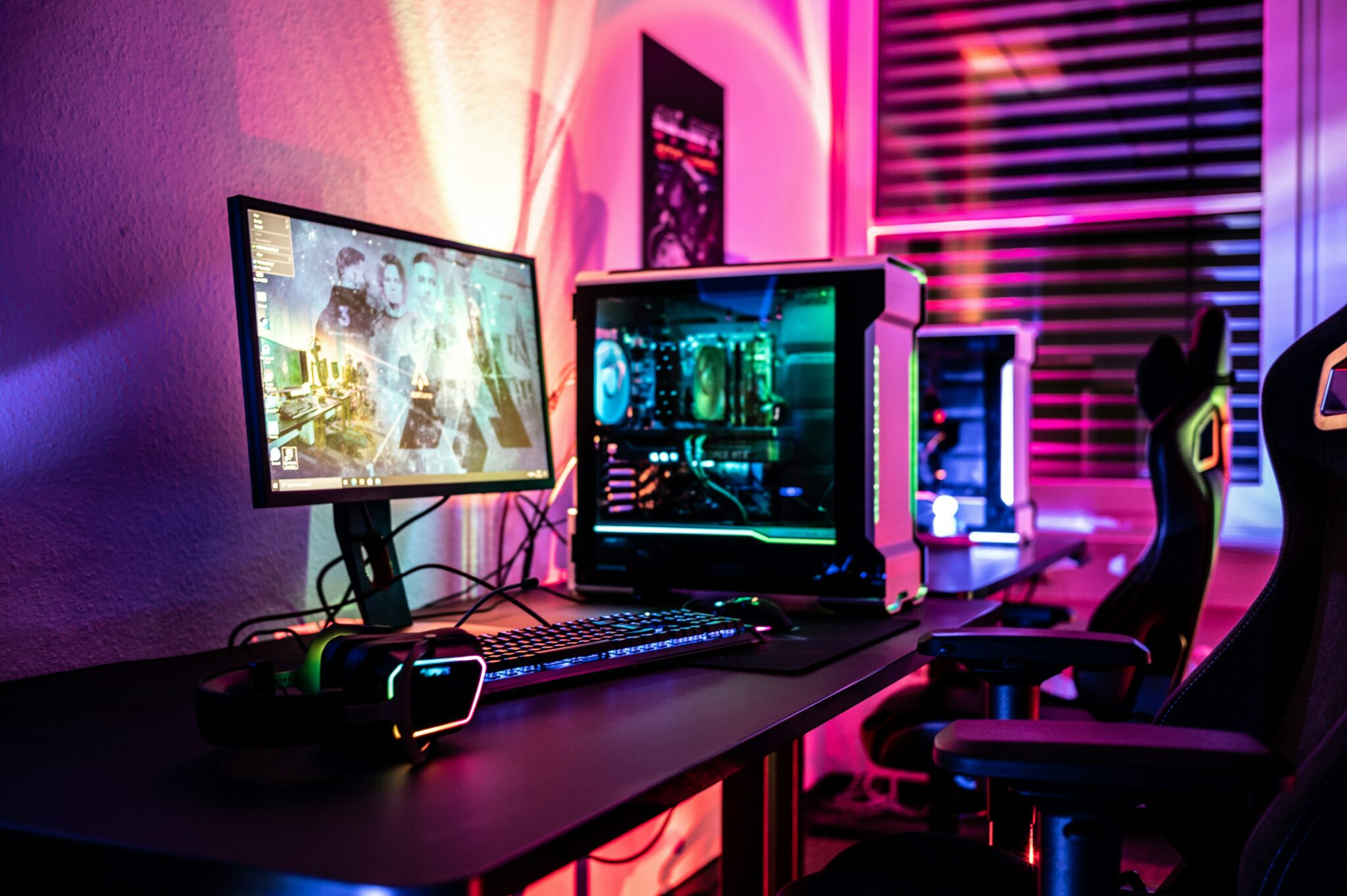
A powerful computer can still feel slow when the setup around it is messy, mismatched, or poorly tuned. Your gaming PC setup shapes how fast games launch, how smooth frames feel, how cool the machine runs, and how focused you stay when the match turns ugly.
American gamers know this pain well. One person spends $1,800 on parts and still deals with stutter. Another builds a mid-range rig, keeps airflow clean, adjusts settings, and gets a smoother night of play. The difference is rarely one magic part. It is the way every piece works together.
A good setup also protects your money. Components cost more when you replace them too early, and bad habits quietly shorten their life. Trusted tech resources, buyer guides, and publishing platforms like digital performance insights can help readers think beyond flashy specs and focus on the complete experience.
Better gaming performance starts with smart choices, not blind spending. Your desk, monitor, cooling, cable path, software, and upgrade plan all matter. When those pieces support each other, the computer stops fighting itself and starts doing what you built it to do.
Build the Foundation Around Balance, Not Bragging Rights
A fast machine can still disappoint when one part drags the rest down. That is why the first step is balance. You are not building a trophy for a spec sheet. You are building a system that stays smooth during real play, whether that means a late-night Fortnite session, a ranked Valorant match, or a demanding story game at 1440p.
Match the CPU and GPU to the Games You Actually Play
Your graphics card gets most of the attention, but the processor still decides how well many games behave. Competitive shooters often lean hard on the CPU because frame timing matters more than pure visual detail. Big open-world games can punish both the CPU and GPU at the same time.
A smart gaming computer build starts with your habits. If you play esports titles on a 1080p high-refresh monitor, a balanced CPU and GPU pairing beats an expensive graphics card trapped behind a weak processor. If you prefer cinematic games at 1440p or 4K, the GPU carries more weight.
One common mistake is buying the strongest graphics card the budget allows, then pairing it with older memory, weak cooling, and a low-end power supply. That setup may look exciting on paper, but it often behaves like a sports car with cheap tires. Speed exists, yet control is missing.
A better move is to plan around the whole frame path. The CPU prepares work, the GPU renders it, memory feeds both, and storage keeps loading smooth. When those pieces are chosen together, you feel the upgrade every time the game gets busy.
Choose Memory and Storage That Reduce Friction
RAM does not make every game faster by magic, but too little of it creates ugly moments. Games pause, background apps fight for space, and Windows starts leaning on storage in ways you can feel. For many U.S. gamers today, 16GB is the practical floor, while 32GB feels safer for streaming, modding, and heavy multitasking.
Storage matters in a different way. A solid-state drive will not turn a weak GPU into a monster, but it changes how the whole computer feels. Games load faster, updates install with less pain, and the system responds without that old hard-drive delay.
Think about a player in Texas who keeps Call of Duty, Cyberpunk, Fortnite, and several launchers installed at once. A tiny SSD fills fast, then performance and patience both suffer. A larger NVMe drive gives the setup breathing room before clutter becomes a daily annoyance.
The counterintuitive part is simple: storage can improve your mood more than your frame rate. That still matters. A setup that feels quick before the match begins makes the whole gaming session less irritating.
Gaming PC Setup Choices That Improve Cooling and Stability
Performance is not only about raw parts. Heat decides how long those parts can hold speed. A gaming PC setup with weak airflow may run fine for ten minutes, then slowly lose performance as temperatures climb and fans scream under the desk.
Create Airflow Before You Chase Expensive Cooling
Airflow starts with direction. Cool air needs a clean path into the case, and hot air needs a clean path out. When fans fight each other or cables block the front intake, the case becomes a warm box with expensive electronics inside.
Many players buy liquid coolers because they look premium. Sometimes they help. Other times, a well-placed air cooler and a clean fan layout do the job with less noise, less cost, and fewer long-term worries. Fancy cooling cannot fix a case that cannot breathe.
A practical example is a compact glass-front case sitting on thick carpet in a Florida bedroom. The parts may be strong, but the system pulls warm, dusty air from a bad spot. Moving the tower onto a stand, clearing the front intake, and cleaning filters can lower heat without buying a single core component.
Strong cooling feels boring when it works. That is the point. The best setups keep stable speeds without making you think about thermals during every long session.
Control Dust, Room Heat, and Fan Noise Like Real Performance Factors
Dust is not cosmetic inside a gaming computer. It coats filters, clings to heatsinks, and makes fans work harder. In homes with pets, carpet, or open windows, dust buildup can become a performance issue faster than people expect.
Room temperature also matters. A PC in a hot upstairs room in Arizona has a different battle than one in a cool basement in Michigan. The same hardware can behave differently because the air feeding the system is different.
Fan noise deserves attention too. Loud fans can push you toward headphones, fatigue, and distraction. A quiet custom fan curve often gives better daily comfort than letting the motherboard panic every time the CPU spikes for a few seconds.
Cleanliness is not glamorous. Still, it protects performance better than many small upgrades. A dust-free case with steady airflow often beats a stronger machine that slowly cooks itself under neglect.
Tune the Display, Controls, and Desk for Faster Reactions
The computer does the rendering, but your body plays the game. The monitor, keyboard, mouse, chair height, and desk layout all affect how quickly you react and how long you can stay comfortable. This is where many builds lose the performance they already paid for.
Pick a Monitor That Fits Your Hardware
A monitor can expose the truth about your system. A 240Hz screen sounds great, but it only helps when your games can push high frame rates consistently. A 4K display looks sharp, yet it can punish a mid-range graphics card until settings are lowered hard.
High refresh gaming works best when the PC can keep frame pacing steady. Smoothness depends on consistent delivery, not one impressive peak number. A game that jumps between 220 and 90 frames per second can feel worse than a locked, stable experience.
For many players, 1440p at a strong refresh rate is the sweet spot. It gives sharper visuals than 1080p without demanding the same power as 4K. That makes it a practical choice for people who want both quality and speed.
The unexpected truth is that the “best” monitor may not be the most extreme one. It is the one your hardware can feed without turning every settings menu into a compromise.
Set Up Your Mouse, Keyboard, and Audio for Less Delay
Your input devices shape the moment between intention and action. A responsive mouse, stable surface, and comfortable keyboard position can make aiming feel cleaner without changing a single internal part. Small details add up when the game gets fast.
Mouse sensitivity should give control without forcing your wrist into tiny panic movements. Competitive players often use larger arm movement because it creates steadier aim under pressure. That does not mean everyone needs the same setting, but it does mean random sensitivity choices hurt consistency.
Audio also plays a bigger role than many casual players admit. Clear positional sound helps you catch footsteps, reloads, and movement cues before they appear on screen. A good headset or speaker setup can change decisions in games where timing matters.
Desk layout should remove friction. Keep cables from dragging, place the monitor at a natural height, and give your mouse enough room. A clean desk will not raise your benchmark score, but it can make your hands and eyes work with less resistance.
Maintain Software, Settings, and Upgrades With Discipline
Hardware gives you potential. Software decides how much of it reaches the game without interference. Drivers, background apps, display settings, game options, and update habits can either support performance or quietly steal it.
Keep Drivers, Launchers, and Background Apps Under Control
Driver updates can fix bugs, improve support for new games, and solve odd performance issues. They can also create trouble when installed carelessly during a major game night. Good maintenance means staying current without treating every update like an emergency.
Background apps deserve suspicion. RGB tools, browser tabs, recording apps, overlays, launchers, and chat programs can all take small bites. One or two may not matter. Ten running together can create stutter that feels like a hardware problem.
A gamer in Ohio might blame a graphics card for sudden frame drops, then discover a browser with thirty tabs and a game launcher downloading updates in the background. The fix is not always an upgrade. Sometimes it is discipline.
Game settings should be tuned with the same mindset. Shadows, reflections, ray tracing, and post-processing can cost plenty while adding little during fast play. Lower the settings that hurt performance most, keep the ones you notice, and stop treating ultra presets as a badge of honor.
Upgrade Only When the Bottleneck Is Clear
Upgrading without diagnosis wastes money. A new GPU will not solve a thermal problem. More RAM will not fix a weak internet connection. A premium CPU cooler will not help if the case intake is blocked by dust and carpet.
Use monitoring tools to watch temperatures, usage, memory load, and frame pacing during real games. Benchmarks can help, but your own play sessions reveal the truth. The goal is to find the part that limits the experience you care about.
A careful gaming PC setup grows in stages. First, fix heat and clutter. Then tune settings. After that, upgrade the part that proves it is holding the system back. This order saves money because it separates real limits from bad habits.
The best upgrade plan is patient. It keeps your current system healthy, improves what can be improved, and spends only when the next part has a clear job.
Conclusion
A better gaming experience does not come from chasing every new part that hits the market. It comes from building a system that makes sense, runs cool, responds fast, and stays easy to maintain. That is a more grown-up way to think about performance, and it usually leads to a better machine.
Your gaming PC setup should serve the games you play, the room you play in, and the way you actually use your computer. That means balance over bragging, airflow over looks, stable frames over wild peaks, and smart upgrades over impulse buys.
Start with the basics that cost little but matter daily. Clean the case, check your temperatures, reduce background apps, adjust your monitor settings, and make sure your desk is not working against your hands. Then look at upgrades with a clear reason.
Build the setup like every part has a job, because it does. When the system works as one, the game feels sharper before you even notice why.
Frequently Asked Questions
What is the best way to improve gaming PC performance at home?
Start with cooling, driver updates, background app control, and in-game settings. These fixes often improve stability before you spend money. After that, check whether the CPU, GPU, RAM, or storage is causing the main limit during real gameplay.
How much RAM does a modern gaming computer need?
Most gamers should treat 16GB as the minimum for current titles. A 32GB setup is better for streaming, modding, recording, heavy browser use, and newer games that demand more memory during large scenes or open-world play.
Does a better monitor increase gaming performance?
A monitor does not make the PC render faster, but it changes what you can see and feel. Higher refresh rates improve smoothness when your hardware can feed enough frames. Match the monitor to your GPU instead of buying by numbers alone.
Why does my gaming PC get slower after playing for a while?
Heat is the common cause. As temperatures rise, parts may reduce speed to protect themselves. Dust buildup, poor airflow, weak fan curves, blocked vents, and hot room conditions can all make performance drop during longer sessions.
Is liquid cooling required for a high-performance gaming build?
Liquid cooling is not required for many strong builds. A quality air cooler with good case airflow can handle plenty of gaming systems. Liquid cooling makes sense for certain CPUs, tight spaces, or style goals, but it is not automatic superiority.
What PC settings should I lower first for smoother gameplay?
Lower shadows, reflections, ray tracing, motion blur, and heavy post-processing first. These settings often cost performance without helping much during fast play. Keep texture quality higher when your GPU has enough video memory, since textures affect visual clarity.
How often should I clean my gaming PC?
Clean dust filters every month or two if your room has pets, carpet, or open windows. A deeper internal cleaning every three to six months works for many homes. Watch temperatures and fan noise; both often tell you when cleaning is overdue.
When should I upgrade my graphics card?
Upgrade the graphics card when it is clearly limiting the games, resolution, and frame rate you want. Confirm this with usage data, not guesswork. If temperatures, RAM, storage, or background apps are the real issue, a new GPU may disappoint.