A crowded counter can make a perfectly good kitchen feel harder to use than it should. You do not need a magazine-level remodel to fix the mess; you need better decisions about what earns space where your hands actually work. Kitchen Counter Organization matters because most American kitchens carry too many appliances, mail stacks, snack containers, charging cords, and “temporary” items that never leave. The counter becomes a parking lot instead of a prep surface.
Cleaner counters change how cooking feels. Dinner starts faster. Wiping up takes less time. Small kitchens feel less cramped, and large kitchens stop turning into storage zones. For homeowners, renters, busy parents, and anyone cooking in a typical U.S. kitchen, the goal is not perfection. The goal is a counter that supports real life without making every meal feel like cleanup before cooking. A cleaner cooking area begins when the counter stops holding everything and starts holding the right things.
Kitchen Counter Organization Starts With Honest Counter Space
A useful counter is not an empty counter. It is a working surface with clear jobs. Most kitchens fail because every item gets treated as equally important, even when half of it belongs in a cabinet, pantry, drawer, or donation box. The first move is deciding which parts of the counter are for prep, which are for daily tools, and which are no longer allowed to collect random clutter.
Define Your Daily Cooking Zone Before Buying Anything
A good counter setup starts with movement, not products. Stand where you chop vegetables, make coffee, pack lunches, or plate dinner. That stretch of counter deserves more freedom than the corner where an unused bread maker has been sitting since last winter.
Many American kitchens have one true work zone, even when the room looks spacious. In apartments, it might be the small area between the sink and stove. In suburban kitchens, it may be the island or the counter beside the range. That area should hold only what helps you cook today, not what you might use someday.
Counter clutter often survives because people organize around objects instead of habits. A blender used twice a month should not outrank the cutting board you use every evening. Once you judge items by frequency, the kitchen starts making sense.
Remove “Almost Daily” Items From Prime Space
The sneakiest clutter comes from things that feel useful but are not used enough to stay out. Stand mixers, air fryers, extra utensil crocks, decorative trays, and large fruit bowls can swallow prime counter space before you notice the cost.
A simple rule works well: if you do not touch it at least four days a week, it needs a better home. That does not mean hiding it forever. It means placing it within reach without letting it dominate the most valuable surface in the room.
This is where many kitchens get lighter fast. A coffee maker may stay. A toaster may stay if breakfast depends on it. The popcorn machine, holiday cookie jar, and spare knife block can move. The counter should serve your week, not your wish list.
Smarter Storage Choices Create Cleaner Cooking Areas
Once the counter has a job, storage has to carry more responsibility. Cleaner cooking areas come from giving every item a real landing place close to where it gets used. The mistake is treating cabinets and drawers as leftovers after the counter fills up. Storage should lead the system, while the counter handles active work.
Use Vertical Space Without Turning Walls Into Clutter
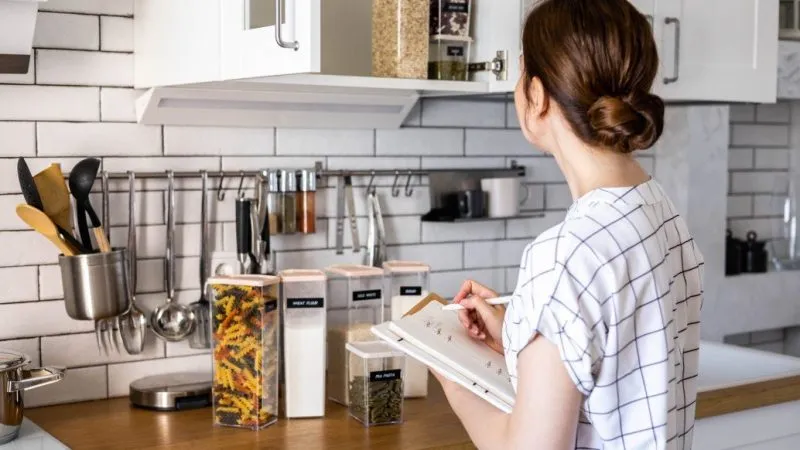
Vertical storage can rescue a tight kitchen, but it needs restraint. A wall rail for measuring cups, a magnetic knife strip, or a slim shelf above a coffee station can open counter space without crowding the room. The trick is choosing tools that belong in sight because they get used often.
Open storage fails when it becomes decoration pretending to be function. Six mugs on hooks may work for a coffee-loving household. Twenty mismatched mugs create visual noise and collect dust. The same goes for spice racks, utensil rails, and floating shelves.
Cleaner cooking areas depend on visual calm as much as physical space. When every wall becomes storage, the kitchen still feels busy. Keep vertical storage tight, useful, and easy to clean.
Give Small Items Containers With Real Boundaries
Loose items create the fastest mess. Salt shakers, vitamins, snack clips, tea bags, pens, keys, and bottle openers seem harmless alone. Together, they make the counter feel permanently unfinished.
A tray, small bin, drawer insert, or turntable gives these items a limit. The container matters less than the boundary. When the tray fills, something has to leave. That one rule stops clutter from spreading across the whole kitchen.
For renters in the USA, removable options work especially well. Adhesive hooks, under-shelf baskets, cabinet-door organizers, and slim drawer bins can improve storage without drilling holes or changing the space. Good organization should not depend on owning the home.
Cleaner Counters Depend on Better Kitchen Habits
Storage solves part of the problem, but habits keep the counter clean. A kitchen can be perfectly arranged on Sunday and chaotic by Thursday if the household has no reset rhythm. The real win is building small routines that make mess harder to ignore and easier to fix.
Build a Two-Minute Closing Routine After Cooking
A counter stays cleaner when cleanup has a clear finish line. After dinner, wipe the prep area, return appliances to their homes, put food away, and clear anything that wandered in from outside the kitchen. Two minutes sounds too small to matter, but it changes the room by the next morning.
The point is not deep cleaning. The point is stopping yesterday’s mess from becoming today’s obstacle. A sink full of dishes is annoying, but a counter full of crumbs, packages, and tools blocks the next meal before it begins.
Families can make this routine easier by assigning zones. One person clears the island. Another handles food storage. Someone else wipes the stove-side counter. Small tasks beat vague responsibility every time.
Stop Letting Non-Kitchen Clutter Enter the Kitchen
The kitchen counter often becomes the household front desk. Mail, receipts, school papers, sunglasses, dog leashes, headphones, and packages land there because the kitchen is central. That convenience creates a daily mess that has nothing to do with cooking.
A better fix is a drop zone outside the cooking area. A wall basket near the entry, a small console table, or a drawer by the door can catch paperwork and everyday carry items before they reach the counter. The kitchen should not manage the whole house.
This change feels strict at first. Then it feels peaceful. Once non-kitchen clutter has another destination, the counter finally has room to support cooking again.
Make the System Easy Enough to Keep
The best setup is the one you can keep on a tired weekday. If your counter system needs perfect folding, labeled jars, matching bins, and constant discipline, it will fail in a normal home. Kitchen Counter Organization should reduce work, not add a second job disguised as order.
Choose Fewer Countertop Categories
Counters work best when they hold a small number of categories. A coffee zone, a prep zone, and a cooking tool zone may be enough for many homes. Each category needs a clear purpose and a limited footprint.
A coffee zone might include the machine, beans, filters, and two mugs. A prep zone might stay clear except for a cutting board and knife block. A cooking tool zone might hold oil, salt, pepper, and the utensils used at the stove. Anything outside those categories has to prove it belongs.
This approach prevents the slow return of clutter. When a new item appears, the question becomes simple: does it belong to an approved counter category? If not, it needs another place.
Design for Cleaning, Not Display
A beautiful counter that takes too long to wipe will not stay beautiful. Too many decorative objects, overlapping trays, and crowded appliance cords make cleaning annoying. When wiping around items takes longer than wiping the surface, the system is working against you.
Clear sightlines help. Leave space around appliances. Keep cords tucked back. Avoid placing food containers near the stove where grease settles. Store wooden boards upright if they are decorative and useful, but do not stack five of them across the prep area.
The strongest kitchen systems respect friction. If putting something away takes three steps, people leave it out. If cleaning takes too much effort, people delay it. Build a counter that forgives busy days, and it will stay cleaner without constant willpower.
Conclusion
Cleaner counters are not about chasing a spotless kitchen that no one lives in. They are about protecting the space where meals begin, coffee gets made, lunches come together, and families move through the busiest parts of the day. A counter should not punish you before you even start cooking.
The most practical Kitchen Counter Organization approach is simple: keep daily tools close, move occasional items away, block non-kitchen clutter, and end each day with a small reset. That combination works because it fits real American homes, from compact rentals to open-plan family kitchens.
Start with one section of counter today. Clear it fully, put back only what you used this week, and give everything else a better home. A cleaner cooking area is built one honest decision at a time, and the first decision is refusing to let your counter become storage again.
Frequently Asked Questions
What is the best way to organize kitchen counters in a small kitchen?
Start by keeping only daily-use items on the counter. Move occasional appliances into cabinets, use wall or cabinet-door storage, and protect one clear prep zone. Small kitchens work best when every inch has a job and nothing stays out from habit alone.
How do I keep my kitchen counter clutter-free every day?
Create a short reset routine after dinner or before bed. Put away food, return tools, clear papers, and wipe the surface. The routine works because it stops small messes from turning into the next day’s cooking problem.
What should stay on kitchen counters?
Keep items you use most days, such as a coffee maker, cutting board, utensil crock, or cooking oils near the stove. Anything used less often should move to a cabinet, pantry shelf, or appliance garage.
How can renters improve kitchen counter organization without renovations?
Renters can use removable hooks, drawer bins, turntables, under-shelf baskets, and cabinet-door organizers. These options create better storage without permanent changes. The biggest improvement still comes from removing items that do not need counter space.
How do I organize kitchen counters with too many appliances?
Rank appliances by weekly use. Keep the ones used four or more days a week on the counter, then store the rest nearby. Heavy appliances can go on lower shelves so they remain accessible without taking over prep space.
What is the easiest kitchen counter organization idea for busy families?
Set up zones for breakfast, lunch packing, cooking, and cleanup. Families need systems that match daily movement, not perfect displays. A simple basket for school papers away from the kitchen can also stop counters from becoming clutter stations.
How do I stop mail and papers from piling up on kitchen counters?
Create a paper drop zone near the entry or in a home office area. Use a wall pocket, tray, or drawer for mail and forms. The kitchen counter should not handle paperwork because paper clutter spreads faster than cooking mess.
How often should I declutter my kitchen counters?
Do a small counter check once a week and a deeper review every season. Weekly checks catch clutter early, while seasonal reviews help you move unused appliances, extra containers, and decorative items that no longer fit how you cook.